Institute for a Sustainable Economy | ISE

Profil

Das Institute for a Sustainable Economy | ISE an der Zeppelin University bündelt die Forschungsaktivitäten des Fachbereichs Wirtschaftswissenschaft, die sich mit zentralen Aspekten der Strategie der Nachhaltigkeitsziele auseinandersetzen.


Wir beschäftigen uns mit Herausforderungen im Bezug auf Nachhaltigkeit der Wirtschaftswelt anhand einer interdisziplinären Herangehensweise, welche unter anderem folgende Forschungsgebiete einschließt: Sustainable Finance, Renewables Finance, Institutionenökonomie, Organizational Governance, Corporate Compliance, Transkulturelle Führung, Innovationsmanagement, Transformation sowie Sustainability Accounting & Controlling.
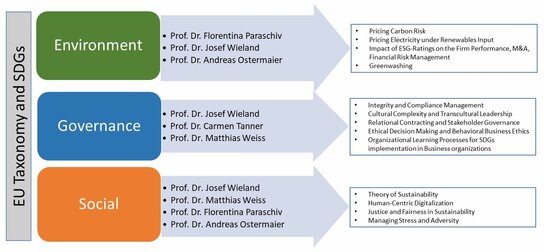
Structure ISE

Research Foci

SDGs & EU Taxonomy

Environment
Governance
Social
Environment
  • Chair of Finance and ZF-Centre for Sustainability Research
  • Chair of Institutional Economics, Organisational Governance, Integrity Management & Transcultural Leadership
  • Chair of Sustainability Accounting
  • ZEPPELIN Chair of International & Digital Economics
  • ZEPPELIN Chair of Sustainability Accounting & Controlling
  • Pricing Carbon Risk
  • Pricing Electricity under Renewables Input
  • Impact of ESG Ratings on Firm Performance, M&A, Financial Risk Management
  • Greenwashing
  • Financial Institutions, Markets and the Green Transition
Governance
  • Chair of Institutional Economics, Organisational Governance, Integrity Management & Transcultural Leadership
  • ZEPPELIN Chair of Innovation Management & Transformation
  • ZEPPELIN Chair of Sustainability Accounting & Controlling
  • Integrity and Compliance Management
  • Cultural Complexity and Transcultural Leadership
  • Relational Contracting and Stakeholder Governance
  • Ethical Decision Making and Behavioral Business Ethics
  • Organizational Learning Processes for SDGs Implementation in Business Organizations
Social
  • Chair of Institutional Economics, Organisational Governance, Integrity Management & Transcultural Leadership
  • Chair of Sustainability Accounting
  • ZEPPELIN Chair of Innovation Management & Transformation
  • Chair of Finance and ZF-Centre for Sustainability Research
  • ZEPPELIN Chair of International & Digital Economics
  • Theory of Sustainability
  • Human-Centric Digitalization
  • Justice and Fairness in Sustainability
  • Managing Stress and Adversity
  • Social capital and digitalization

Prof. Dr. Josef Wieland, Prof. Dr. Andreas Ostermeier, Prof. Dr. Florentina Paraschiv, Prof. Dr. Andreas Ostermeier, Prof. Dr. Jarko Fidrmuc, Prof. Dr. Matthias Weiss and Dr. Florian Horky contribute with their research output to the Sustainable Development Goals strategy.
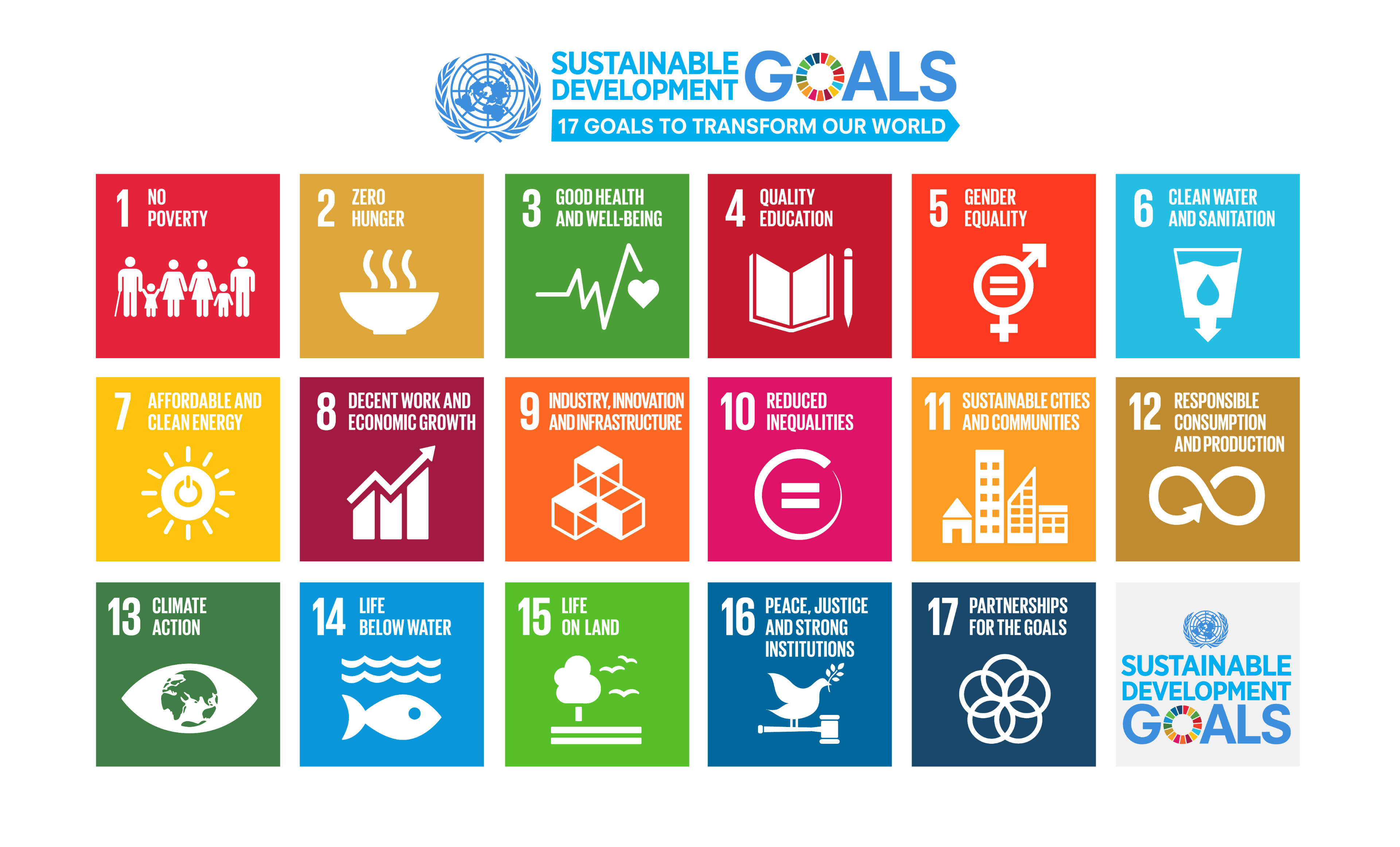
Graphic: UN Communication Material

Prof. Dr. Florentina Paraschiv, Prof. Dr. Josef Wieland, and Prof. Dr. Andreas Ostermeier focus on research topics consistent with the EU Taxonomy regulatory framework.
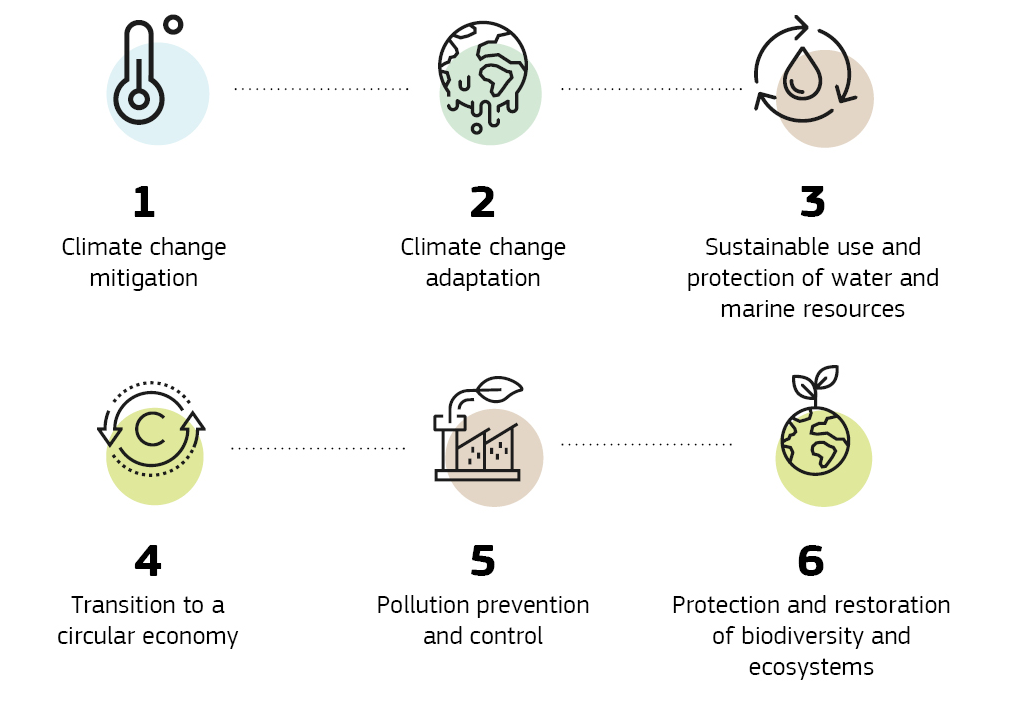
Graphic: European Commission

Structure

Prof. Dr. Florentina Paraschiv, Chair of Finance and ZF-Centre for Sustainability Research

Research Overview

Challenges of the EU TAXONOMY for companies

ESG related ongoing studies:

"The Effects of ESG Scores on Acquisition Premiums and Post-Merger Performance." (Knoll, S. & Paraschiv, F. (2022))

"Do Corporate Green Bonds Fetch a “Greenium?”" (Paraschiv, F., Russo, M., Gausemel, A.I., Stangeland, O.F. (2022))

Contribute to climate neutrality by clean and affordable MOBILITY

"Design thinking behind vechicle-to-grid: smart charging parking for urban areas in Europe" (Paraschiv et al. 2022)

  • Reduce emissions in street traffic
  • Enhance electromobility

Embed SUSTAINABILITY in processes and decision making

"Medium-term Planning for Thermal Electricity Production." OR Spectrum, 36(3), 723-759. (Best Paper Award, Conference Energy Finance, 2014) (Kovacevic and Paraschiv, (2014, 2020))

  • Are CO2 certificate prices incentivizing greener electricity production?

Integration of RENEWABLE ENERGIES

Several published articles shedding light on implications of wind and photovoltaic on pricing and trading strategies (to be detailed on next slides).

  • Wind and PV challenge pricing processes and electricity grids
  • Wind and PV challenge trading

Exploring factors that explain companies' ranking in ESG indexes

Implications of Environmental, Social, and Governance components for ESG scoring/rating

ESG-related upcoming studies:

"The Effects of Green Patenting on ESG scoring." (Paraschiv, F. (2022))

"Greenwashing in the light of EU taxonomy matrix of thresholds." (Paraschiv, F. (2022))

Paraschiv, Florentina
Paraschiv, Florentina Prof Dr

Prof. Dr. Matthias Weiss, ZEPPELIN Chair of Innovation Management & Transformation

Research Overview

Preserve and enhance RESILIENCE in organizations

Studying resilience in organizations on different levels:

"Mitigating Negative Side Effects of Innovation Project Terminations: The Role of Resilience and Social Support" (Todt, Weiss, & Hoegl (2018))

"Team resilience in organizations: A conceptual and theoretical discussion of a team level concept" (Hartmann, Weiss, & Hoegl (2020))

Contribute to climate neutrality by sustainable MOBILITY

"Preferences for the Shared Use of Electric-Powered Vehicles in Mobility Packages: An Empirical Analysis of MaaS in a University Context" (Decker, Marx, Weiss, & Werbeck (2023))

  • Project "GenoMobil": Cooperatives as organizational form for an eco-social transformation of integrated mobility

Drivers of organizational INNOVATION

  • How can we stimulate and support creativity and innovation in organizations?

Dealing with stressors and adverse experiences at the workplace

Ongoing studies and published articles shedding light on adversity at the workplace and how to avoid negative psychological consequences.

  • The dual nature of stressors
  • The detrimental role of (chronic) stress
  • Types and outcomes of adversity

Entrepreneurship and innovation to combat poverty in developing countries

Ongoing studies shedding light on how innovation and entrepreneurship in low-income contexts can succeed to alleviate poverty and to improve living.

"The rhythm of innovation at the BOP: Dealing with multiple constraints through effectuation and causation (Best Paper Award ISPIM Innovation Forum)" (Koepplin, Weiss, & Hoegl (2016)

HUMAN-CENTRIC DIGITALIZATION and ARTIFICIAL INTELLIGENCE use at the workplace

| Project "INTERACT! New Forms of Social Interaction with Intelligent Systems"

"Offloading under cognitive load: Humans are willing to offload parts of an attentionally demanding task to an algorithm" (Wahn, Schmitz, Gerster, & Weiss (2023))

Prof. Dr. Josef Wieland, Chair of Institutional Economics, Organisational Governance, Integrity Management & Transcultural Leadership and LEIZ

Research Overview

Transcultural Caravan Network | TCN

  • Annual Transcultural Leadership Summit (TLS)
  • Annual Transcultural Student Research Groups (TSRG)
  • Network of Universities from Europe, Asia, Africa and South America
  • Transcultural management and competences

Centre for Leadership and Innovation in Asia (CLIA)

  • Platform for discussion on Asia related topics
  • Leadership and innovation in Asia

Relational Economics & Organizational Governance

  • Corporate governance and shared value creation
  • Organizational learning as relational learning
  • Network organizations

EU Taxonomy

  • German Forum Compliance and Integrity (FCI)
  • German Network of Business Ethics (DNWE)
  • National CSR Forum

Bodensee Innovation Cluster | BIC

  • Annual BIC conference and research reports
  • Regular meetings with representatives from firms from the region
  • Network of organizations and experts

Prof. Dr. Andreas Ostermeier, ZEPPELIN Chair of Sustainability Accounting & Controlling

Research Overview

EU Taxonomy

  • How does sustainability reporting influence firm and investor decisions?
    Nipper, M., Ostermaier, A., & Theis, J. (2025). Mandatory disclosure of standardized sustainability metrics: The case of the EU Taxonomy Regulation. Corporate Social Responsibility and Environmental Management, 32(2), 2171-2190.

European Sustainability Reporting Standards (ESRS)

  • How do sustainability reporting standards, particularly the ESRS, influence firm and investor decisions?
    "Disaggregation of emissions reduction targets and investor decisions" (Nipper, Ostermaier, & Theis, ongoing)

Incentives and Ethics

  • Non-monetary incentives and reciprocity in employee behavior:
    Ostermaier, A., & Schäfer, P. (2024). Do good intentions pay off? employee responses to well-intended actions with risky outcomes. European Accounting Review, 33(1), 313-334.

Artificial Intelligence and Mangerial Decision-Making

  • How to ensure the responsible use of AI?
    Krügel, S., Ostermaier, A., & Uhl, M. (2023). ChatGPT’s inconsistent moral advice influences users’ judgment. Scientific Reports, 13(1), 4569.
    Krügel, S., Ostermaier, A., & Uhl, M. (2022). Zombies in the loop? Humans trust untrustworthy AI-advisors for ethical decisions. Philosophy & Technology, 35(1), 17.

Honesty in Mangerial Reporting

  • How to support honesty in mangerial reporting?
    Brunner, M., & Ostermaier, A. (2019). Peer influence on managerial honesty: The role of transparency and expectations. Journal of Business Ethics, 154, 127-145.
    Ostermaier, A., & Uhl, M. (2017). Spot on for liars! How public scrutiny influences ethical behavior. PloS one, 12(7), e0181682.

Performance Evaluation

  • Reliable evaluation of employee performance:
    Subjective performance evaluation and disaggregated feedback (Elsinger, Ghiță, Maas, & Ostermaier, ongoing)
    Performance evaluation guidelines in subjective performance evaluation (Ghiță, Ostermaier, & Yin, ongoing)

Associate Members

Prof. Dr. Jarko Fidrmuc, ZEPPELIN Chair of International & Digital Economics

Research Overview

Trade and Sustainability

  • Investigating the role of international trade for sustainability and the green transition of the Economy

    Fidrmuc, J., Trucu, C. & Horky, F. (2024). Trade in rare earths for the renewable energy transformation in Europe. In progress

    Frensch, R., Fidrmuc, J., & Rindler, M. (2023). Topography, borders, and trade across Europe. Journal of Comparative Economics, 51(3), 816-832.

Economics of green (energy) transition

  • The financial system and financial markets are necessary to provide the (macro-level) funding for the green transformation

    Horky, F., & Fidrmuc, J. (2024). Financial development and renewable energy adoption in EU and ASEAN countries. Energy Economics, 131, 107368.

    Ingoglia, M., Horky, F., & Fidrmuc, J. (2024). Energy, pandemics, and urban economics: cost-of-living differences between European cities. Applied Economics Letters, 1-5.

Digitalization and a sustainable economy

  • Digitalization is a crucial enabler of sustainable economic development, but also a potential threat given its potential to create a digital divide.
    Fiedler, P., Fidrmuc, J., & Reck, F. (2021). Automation, Digitalization, and Income Inequality in Europe. Finance a Uver: Czech Journal of Economics & Finance, 71(3).

Firm financing as basis of a sustainable economy

  • SMEs are responsible for the majority of economic surplus and labor force provided in Europe. Thereby, understanding SMEs financing needs is crucial when promoting and facilitating a sustainable economy

    Fidrmuc, J., Hainz, C., & Hölzl, W. (2024). Individual credit market experience and beliefs about bank lending policy: evidence from a firm survey. The Scandinavian Journal of Economics, 126(2), 387-414.

    Fidrmuc, J., & Horky, F. (2023). Experience and Firms’ Financing Behavior: A Behavioral Perspective. German Economic Review, 24(3), 233-269.

Dr. Florian Horky

Research Overview

Financing the green transition

  • Moving from fossil fuels to sustainable electricity sources requires substantial amounts of capital. Moreover, investments in sustainable energy production are often associated with higher risks than standard corporate and household lending. Therefore it is crucial to investigate market-based financing streams and instruments for the green transition:

    Horky, F., & Fidrmuc, J. (2024). Financial development and renewable energy adoption in EU and ASEAN countries. Energy Economics, 131, 107368.
    Horky, F., & Martin, R. Capital markets and renewable energy in the EU. SUERF Policy Brief. No.1030
    Horky, F., Lucey, B., Mitra, S., Ren, B. Incorporating idiosyncratic risk factors into CAT bond pricing: A machine learning approach. In progress

Green investment preferences

  • "Green" Investments can be seen from a financial value or an investor's values perspective. Green preferences substantially shape such green investments, but are hard to grasp given the multidimensional impacts shaping them.
    Horky, F., Pasquali, A., & Magazzino, C. (2024). ESG rating disagreement portfolios–Evidence from the EuroStoxx 600. Finance Research Letters, 69, 106117.
    Mutascu, M., Horky, F., & Strango, C. (2023). Good or bad? Digitalisation and green preferences. Energy Economics, 121, 106640.

Firms' financial access & decisions

  • Firms (and especially SMEs) are the main shaping forces of the economic environment next to households. From a sustainability perspective it is important to understand their financial flows, access and decisions.
    Fidrmuc, J., & Horky, F. (2023). Experience and Firms’ Financing Behavior: A Behavioral Perspective. German Economic Review, 24(3), 233-269.
    Horky, F. (2024). SMEs' Perceptions of Availability of External Finance (WP No. 11/2024). Research Department, National Bank of Slovakia.
    Horky, F., Paraschiv, F., Reite, E., Sarkisyan, J. ESG ratings and mergers and acquisitions. In progress.

Digitalization and human behavior

  • Increasing digitalization affects every aspect of our live and thus also sustainability related issues. It can diminish barriers but built-up a new digital divide.
    Horky, F., Krell, F., & Fidrmuc, J. (2023). Setting the stage: Fairness behavior in virtual reality dictator games. Journal of Behavioral and Experimental Economics, 107, 102114.
    Magazzino, C., Gattone, T., & Horky, F. (2025). Economic and financial development as determinants of crypto adoption. International Review of Financial Analysis, 104217.
    Horky, F., Rachel, C., & Fidrmuc, J. (2022). Price determinants of non-fungible tokens in the digital art market. Finance Research Letters, 48, 103007.

Horky, Florian
Horky, Florian Dr rer pol

Teaching: Current Courses that Include a Sustainability Focus

Prof. Dr. Florentina ParaschivTopics in Green Finance (Master)
Sustainable Finance (Bachelor)
Energy Transition Thinking Green (Bachelor)
Prof. Dr. Carmen TannerBehavioral Business Ethics (Bachelor)
Prof. Dr. Josef WielandCorporate Social Responsibility and Corporate Governance (Bachelor)
Relational Economics (Master)
Prof. Dr. Matthias WeissAdvanced Methods - Studying the Digital Transformation of Workplaces (Bachelor)
Management of Innovation and Transformation (Bachelor)
Prof. Dr. Andreas OstermeierAccounting & Reporting (Master)
Digital Perspectives to Performance Measurement

Contact

Head of Institute for a Sustainable Economy | ISE

Paraschiv, Florentina
Paraschiv, Florentina Prof Dr
Head of Institute for a Sustainable Economy | ISE
Direktorin ZF-Centre for Sustainability Research
Tel:+49 7541 6009 -1231
Raum:Semi 1.13L
Zeit, um zu entscheiden

Diese Webseite verwendet externe Medien, wie z.B. Karten und Videos, und externe Analysewerkzeuge, welche alle dazu genutzt werden können, Daten über Ihr Verhalten zu sammeln. Dabei werden auch Cookies gesetzt. Die Einwilligung zur Nutzung der Cookies & Erweiterungen können Sie jederzeit anpassen bzw. widerrufen.

Eine Erklärung zur Funktionsweise unserer Datenschutzeinstellungen und eine Übersicht zu den verwendeten Analyse-/Marketingwerkzeugen und externen Medien finden Sie in unserer Datenschutzerklärung.